


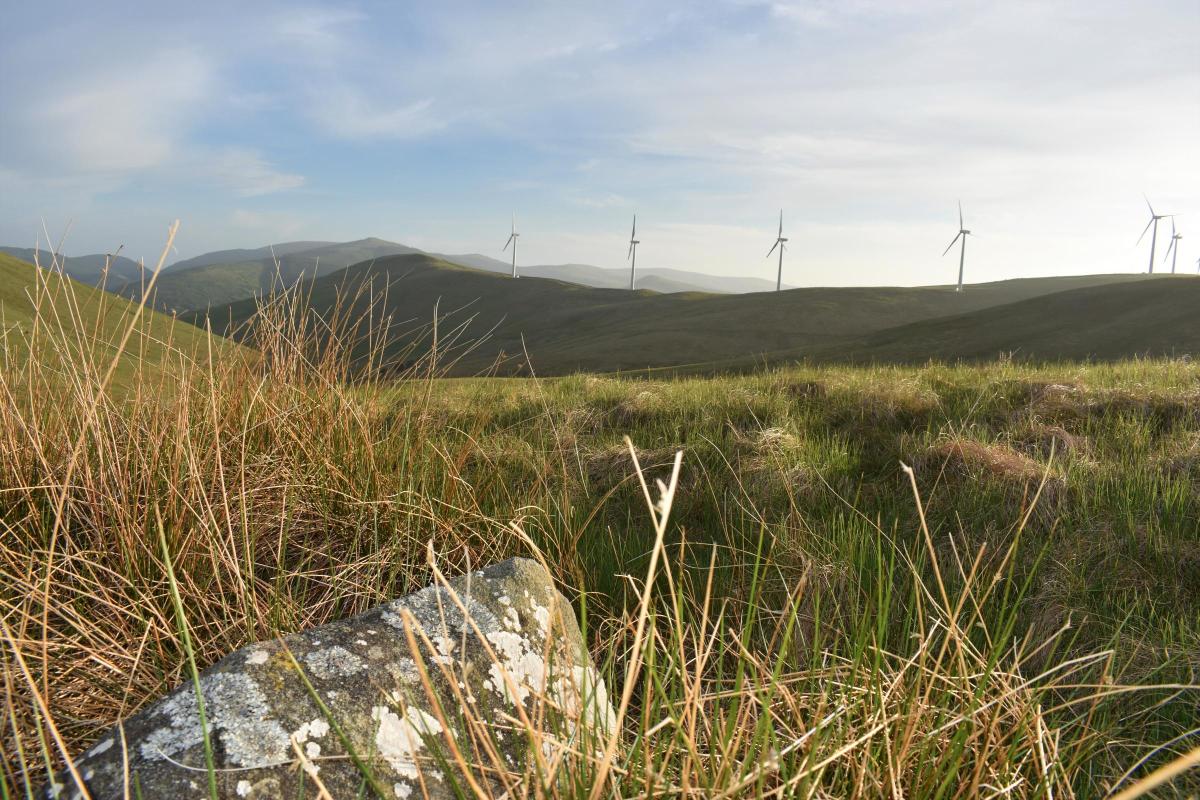
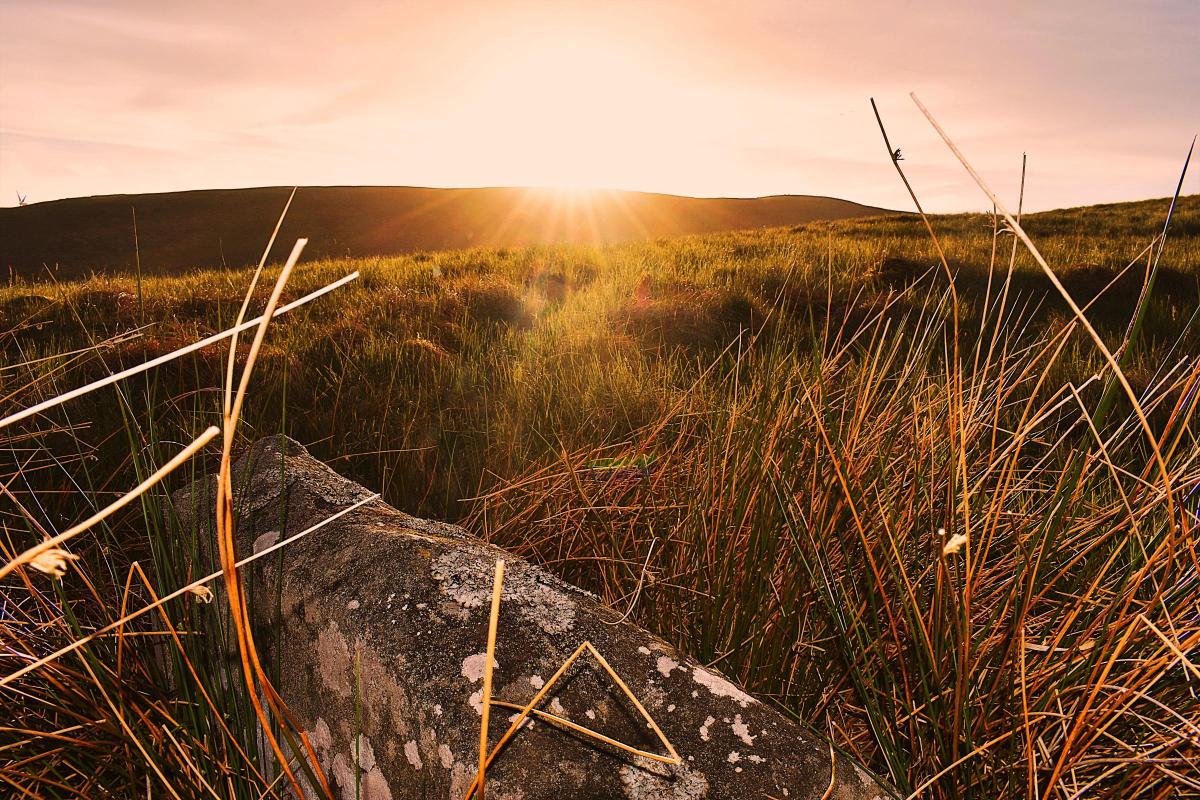

It was strange how the four boulder-like stones hidden in among the rushes in this remote glen in the Ochils could stir such strong emotions.
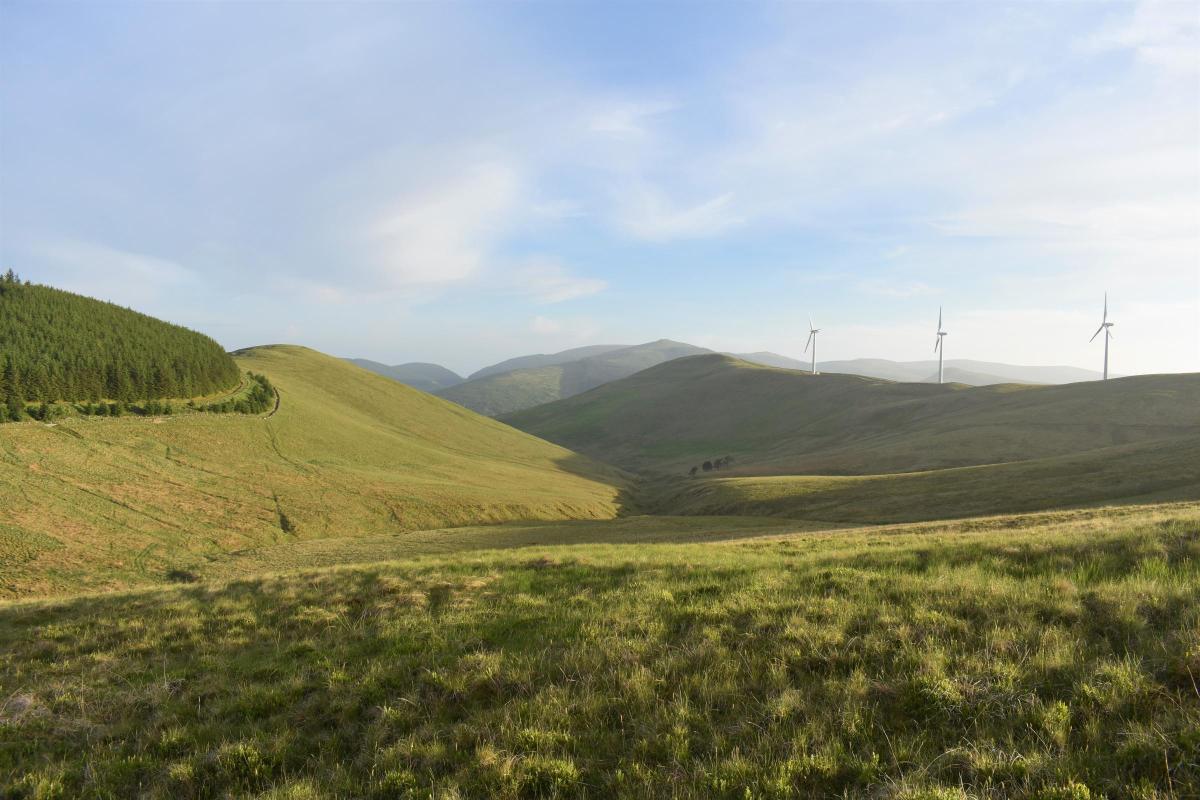
I was in Borland Glen, which lies between Glendevon and Dunning Glen just a short hop across the Wee County border, and before me lay the remnants of a stone circle.
It was a haunting place, made even more so by the sun setting over the brow of the hill.

Not far from where I stood, a small tributary burn ran down a grassy gully, making its way to Glendevon.
A tear drop flecked my cheek – who were these people from prehistoric times who once stood on this very spot?
What were they like and how did they live?
It was a most humbling experience, made even more so by the nearby wind turbines – old meeting new, distant past and modern-day present all within the same panorama.
I stayed for a while longer, reluctant to leave, but it was getting dark, and it was time to go.
As I made my way back down a forest track into nearby Dunning Glen, my mind was alive with wild imagery of the landscape as it might have once been.

Of course, we can only speculate, but most probably the hills here consisted of a patchwork of forest and clearings.
There is certainly archaeological evidence of farming in Scotland from around 3,700 BC, so it seems likely that land would have been cleared to some extent, both for food production and wood for the building of shelters and fuel.
One would also imagine that this stone circle at Borland Glen would have been open to the elements, and not forested, given that that such sites were most probably used for religious, ceremonial or social purposes and influenced hugely by the heavenly open views of sun, stars and moon.

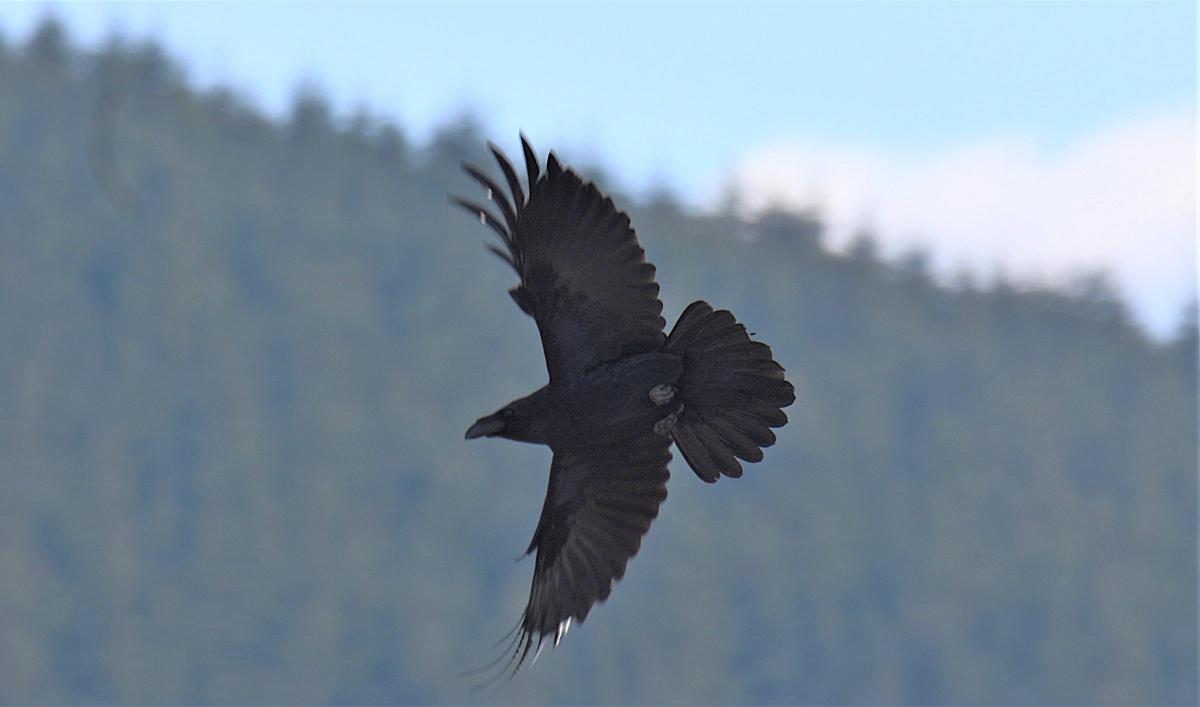
I was so consumed by reflections of the distant past that I didn’t see at first the ravens in the sky above, spiralling and tumbling over a nearby ridge in a spectacular black-winged aerial ballet.
There were eight birds and I recalled seeing similar winter dusk raven displays in the exact same area several years ago.
Most probably, such congregations comprise mainly of young birds and adult non-breeders, and the aerial acrobatics are all part of the process of pairing-up and finding the right partner.
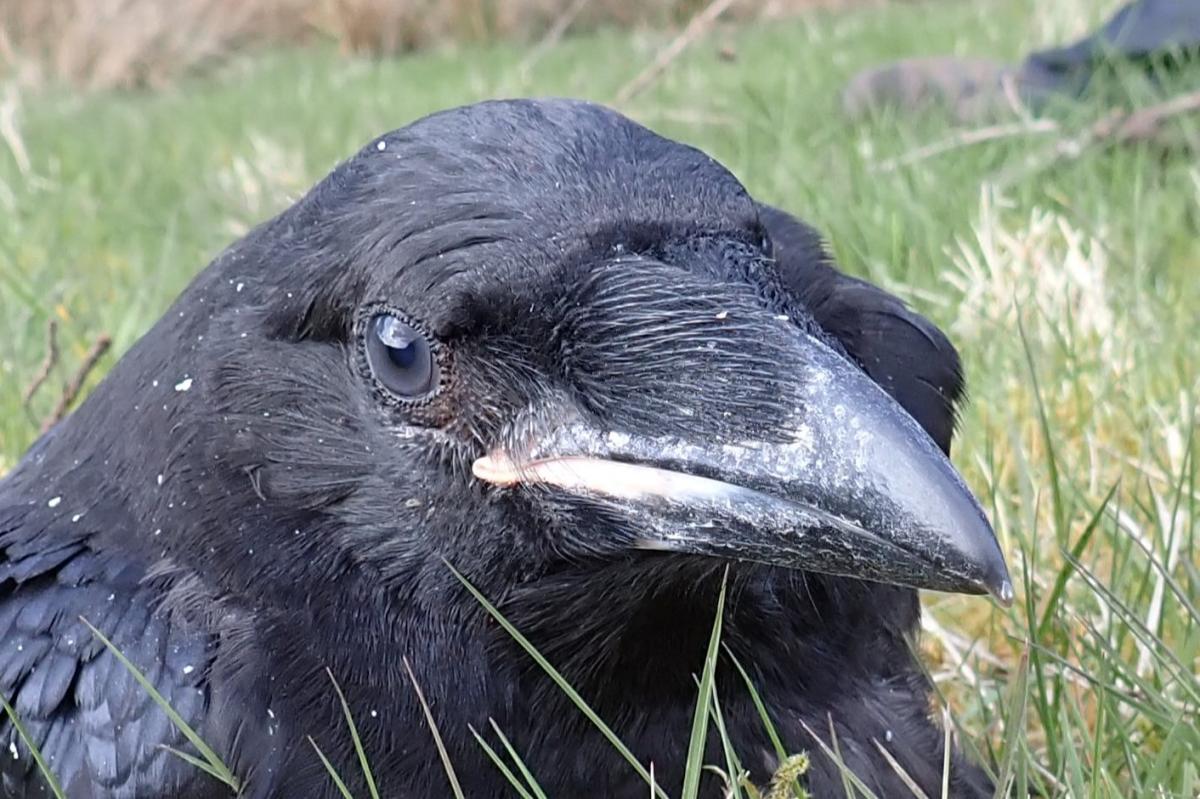
In folklore, ravens have been vilified from the earliest of times; a dark cloak of a bird that haunts our wild and lonely places; a scavenger and predator inextricably linked with death.

On watching the ravens rise and fall like huge black bats, I wondered what emotions they would have stirred in the minds of our ancestors living by the Borland Glen stone circle.
Was there fear and foreboding, or did they respect these birds as an integral part of this stark and windswept landscape?
With such thoughts tumbling through my mind, I pulled up my jacket collar and continued down the ever-darkening forest track.


Share