



The goosanders on the River Devon had been perplexing me because most of the females I had encountered this spring did not seem to be breeding and were hanging around on their own.
After a bit of thought, I concluded that this was all part and parcel of nature, and that one- or two-year-old goosanders often look adult-like before they are ready to nest, and it may not be until their third year that they get down to breeding.
Furthermore, nature often has a way of regulating itself and being in line with the natural carrying capacity of the environment in terms of food resources.
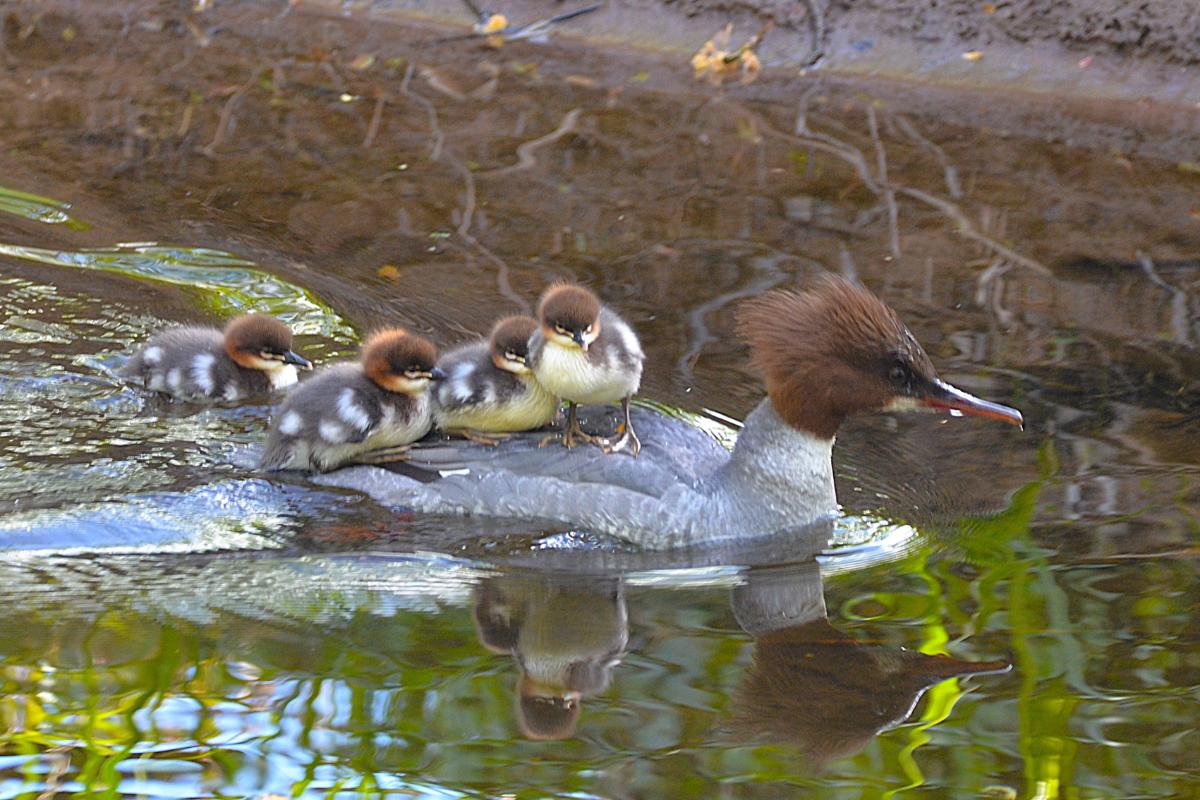
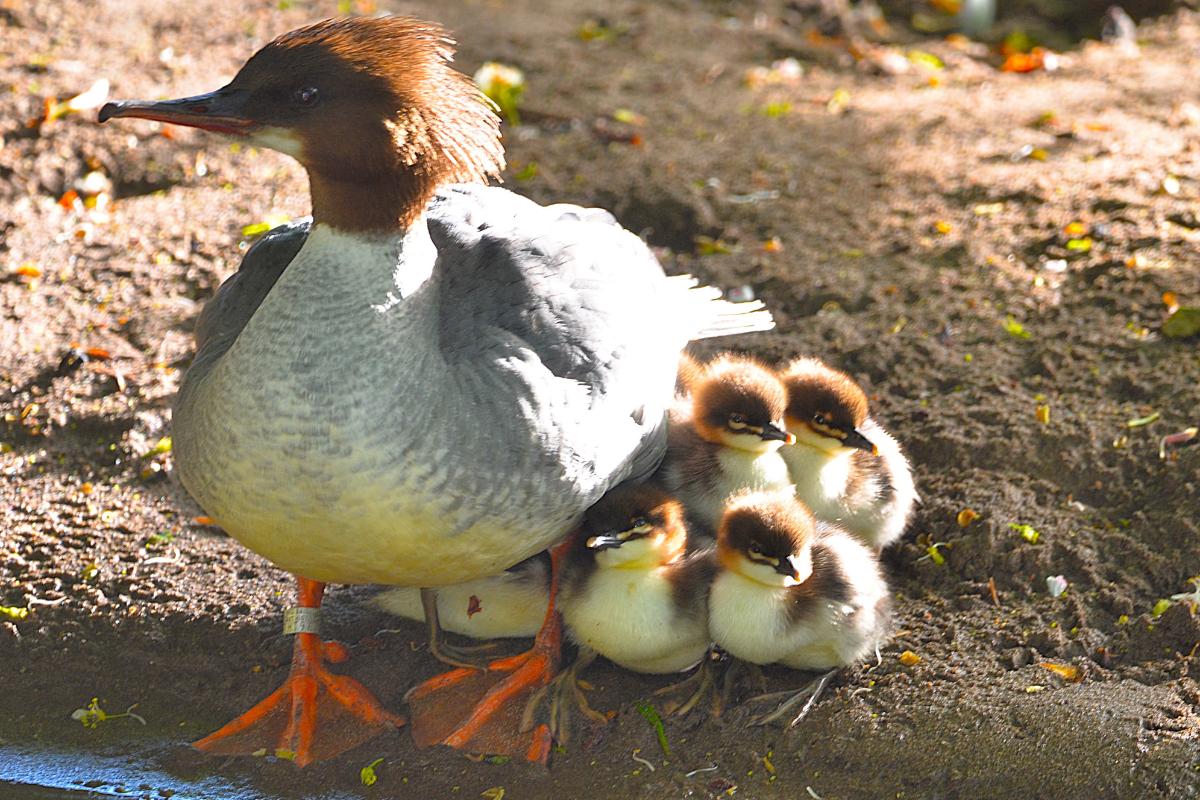
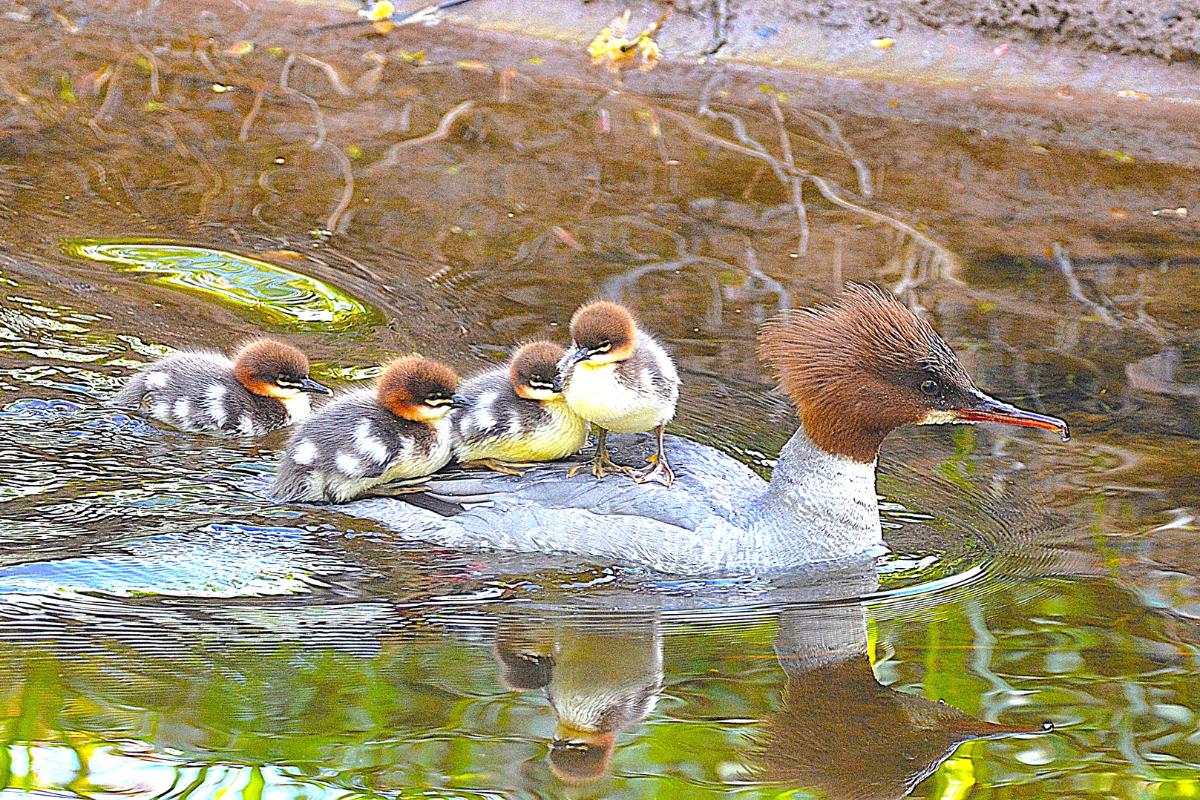
However, I was fortunate enough to find one successful nesting bird with her brood and was thrilled to witness the endearing behaviour of the mother carrying her youngsters on her back.

This behaviour is most frequent when the chicks are very young and when the weather is cold, or when swimming over fast water, or if danger is nearby.
Newly hatched chicks lose heat quickly, especially in cold Scottish rivers, and riding on the mother’s back helps them conserve energy and stay warm.
A chick on its mother’s back is also harder to grab by a predator than one swimming alone.

Goosander broods can travel surprisingly long distances soon after hatching.
The mother may lead them from a nest site high in a tree cavity to safer feeding areas downstream.
Tiny chicks also tire quickly, which is another reason why they will hitch lifts every so often.

Goosanders are native to our rivers, having been regular winter visitors to Scotland from Scandinavia for many centuries, with the first breeding recorded in 1871, and there are now around 4,800 breeding pairs in the whole of the UK.
They are an integral part of the riparian ecosystem and as much the beating heart of the river as other fish-eaters like otters and kingfishers.
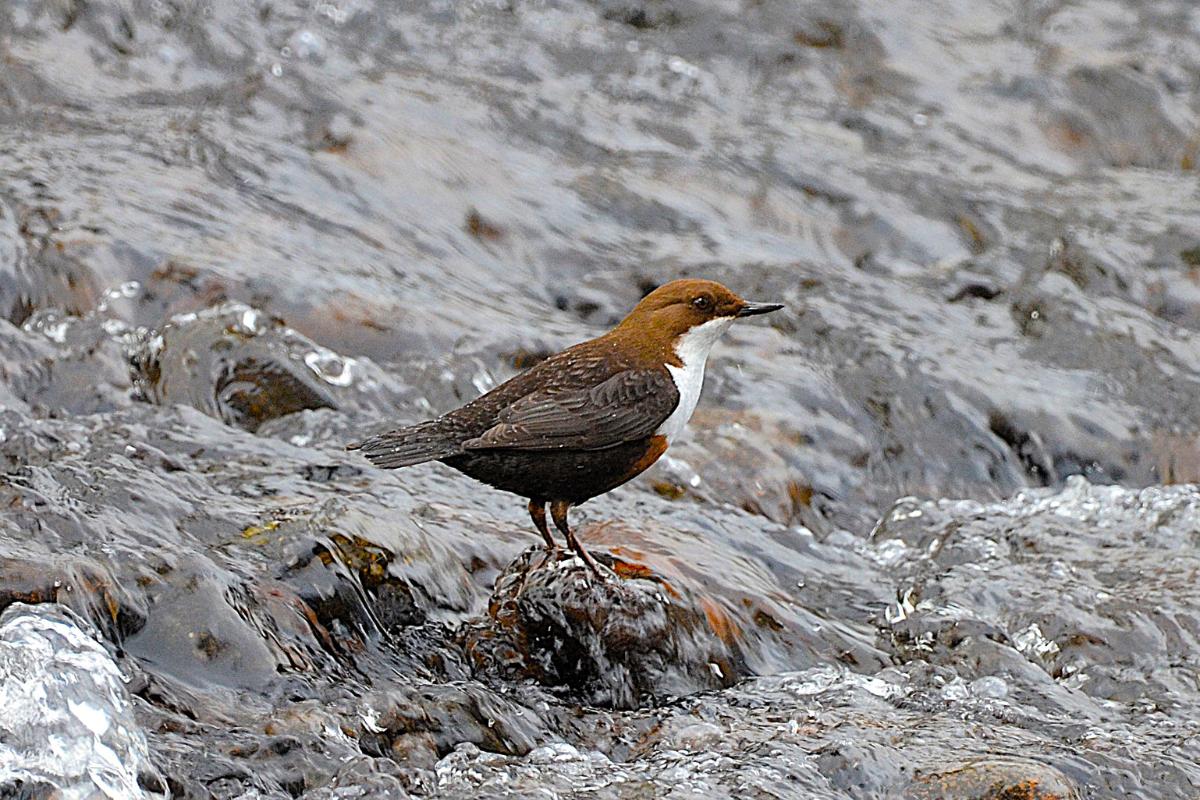
I have also seen some young dippers on the Devon over the last week or two, perched on rocks by the water as their parents flash back and forth to feed them on fast-beating wings.

The presence of dippers is a good sign that the river is healthy because it means there are plenty of insect nymphs and other invertebrates on the riverbed for the birds to feed upon.
Dippers also take fish eggs and tiny fish fry, although aquatic insects form the bulk of their diet.
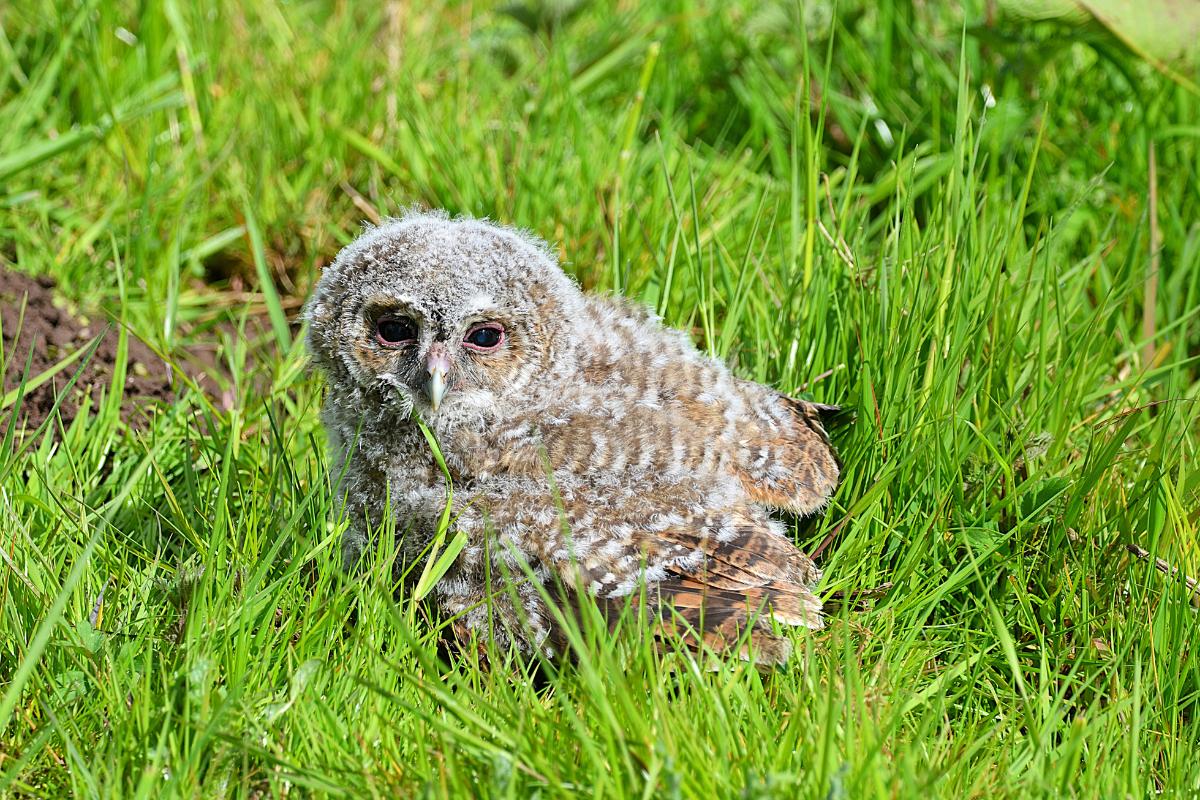
Meanwhile, on one afternoon when walking along the bankside, I was surprised to find a young tawny owlet sitting on a small wooden bridge spanning a burn.

It had flown out of its nest but still had to perfect the art of flying.
Given its exposed position, I gently moved it onto a tree branch several yards away, and with its mother calling in a tree above, the wee owlet will get well looked after until it has built up the strength to be more proficient on the wing.


Share