


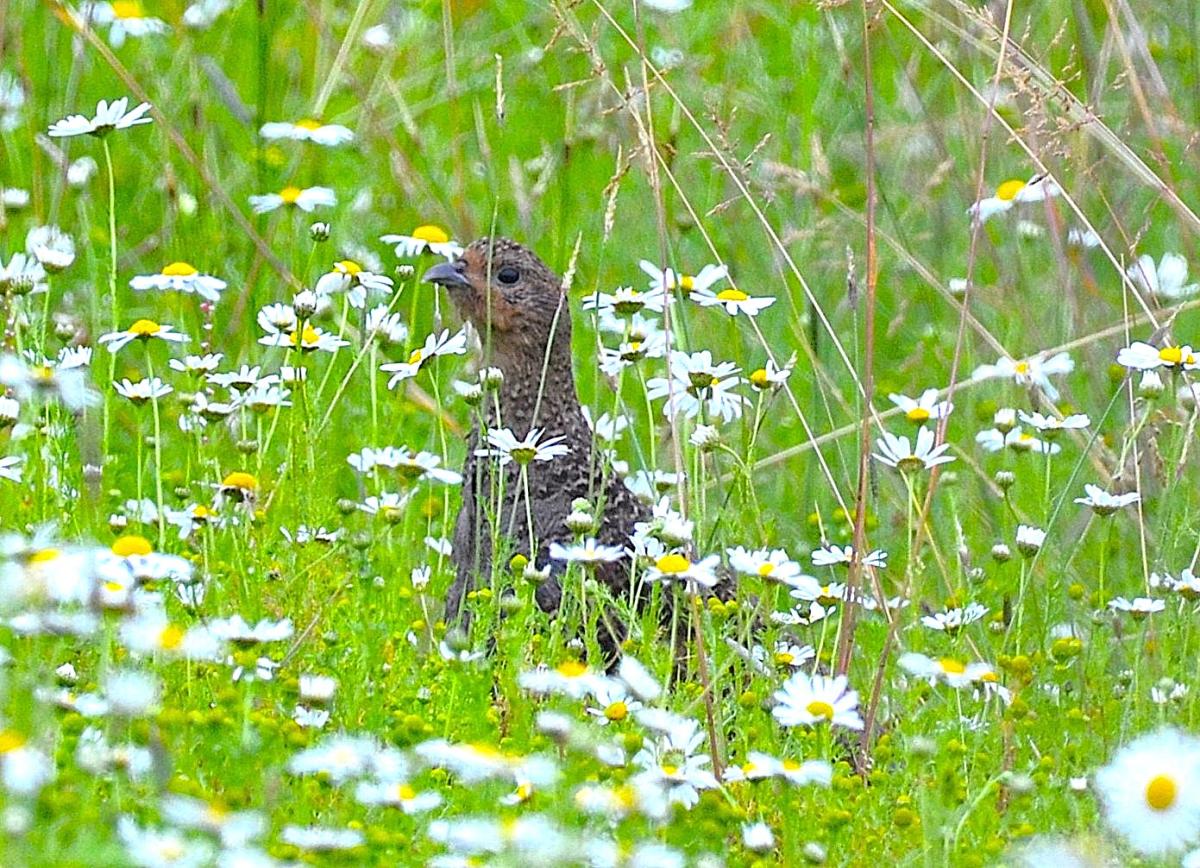

As I wandered along the haugh of the River Devon between Tillicoultry and Dollar, a subtle movement in among a sea of white-petalled mayweed caught my eye.
But what was it?
I scrutinised the area closely, but nothing moved, so maybe it was just my imagination. Then, a bird’s head popped-up, just the merest glimpse before it dropped back down again.

I waited some more, and the bird, which was about the size of a pigeon, briefly materialised once more, before disappearing in amongst the thick flush of flowers.
It was a grey partridge, and I briefly glimpsed another one hiding nearby. I had been momentarily confused by the identification as the bird was largely mottled brown, which made me think it was a juvenile partridge, as the adults tend to have brick-red facial markings and are greyish beneath.

However, when I posted the photo on social media, the Patridge International Network organisation told me it was actually an adult female, whose plumage had been made more dowdy by moulting.
I was thrilled at the sighting because the grey partridge is one of our most threatened farmland birds and is on the Red List of Birds of Conservation Concern, the UK population having fallen by around 90% since the late 1960s.

The strange creaking call of the dumpy partridge used to be a common feature of thecountryside.
Thomas Coward in his classic work ‘Birds of the British Isles’ first published in 1920 stated that the call ‘cannot be expressed by any combination of letters’, but more tellingly perhaps, he also wrote that the partridge is ‘too familiar to need much description’.
Such words have a hollow ring today with grey partridge numbers at only a fraction of their size compared with the halcyon days at the end of the 19th century when the birds were incredibly common and shot in their millions.
One wonders what King Henry VIII would have made of all this, for the partridge was a bird he revered for its culinary qualities.

So much so, he issued an order in 1536 calling for anyone who should unlawfully ‘kill or molest’ these birds to be thrown into prison and ‘visited by such other punishments as to the king should seem meet’.
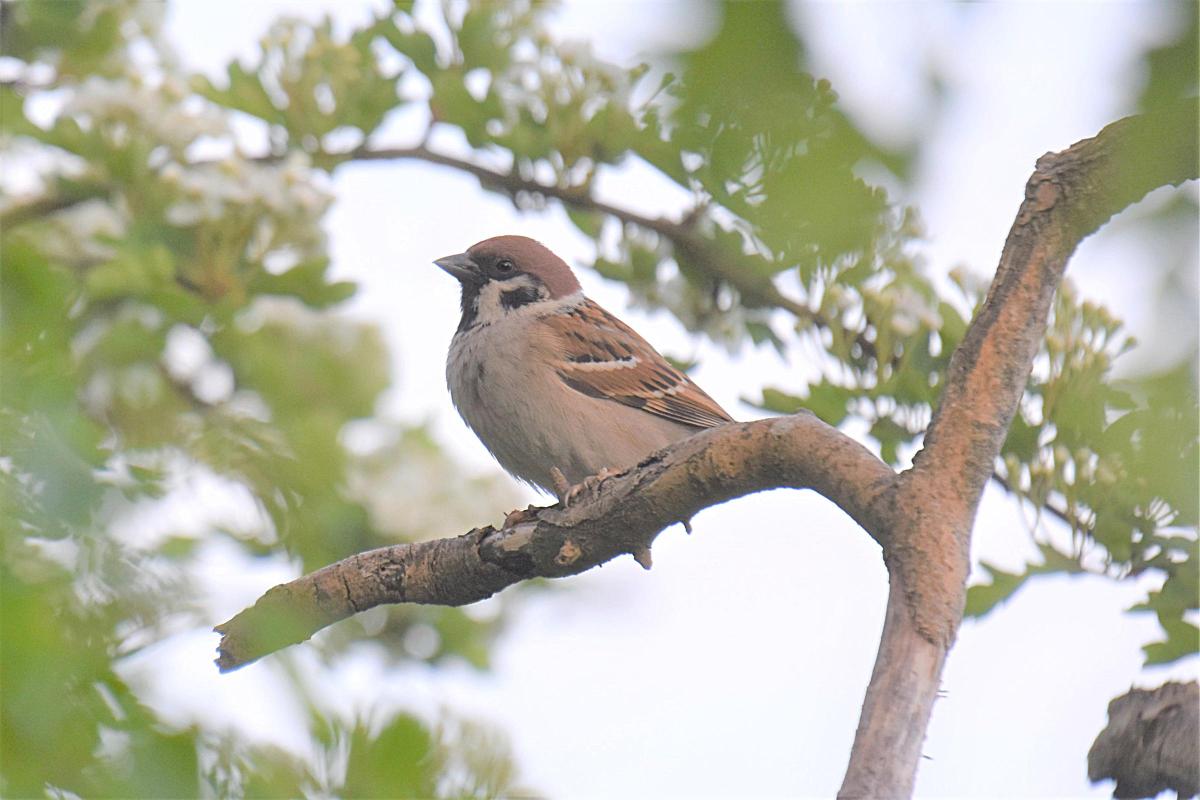
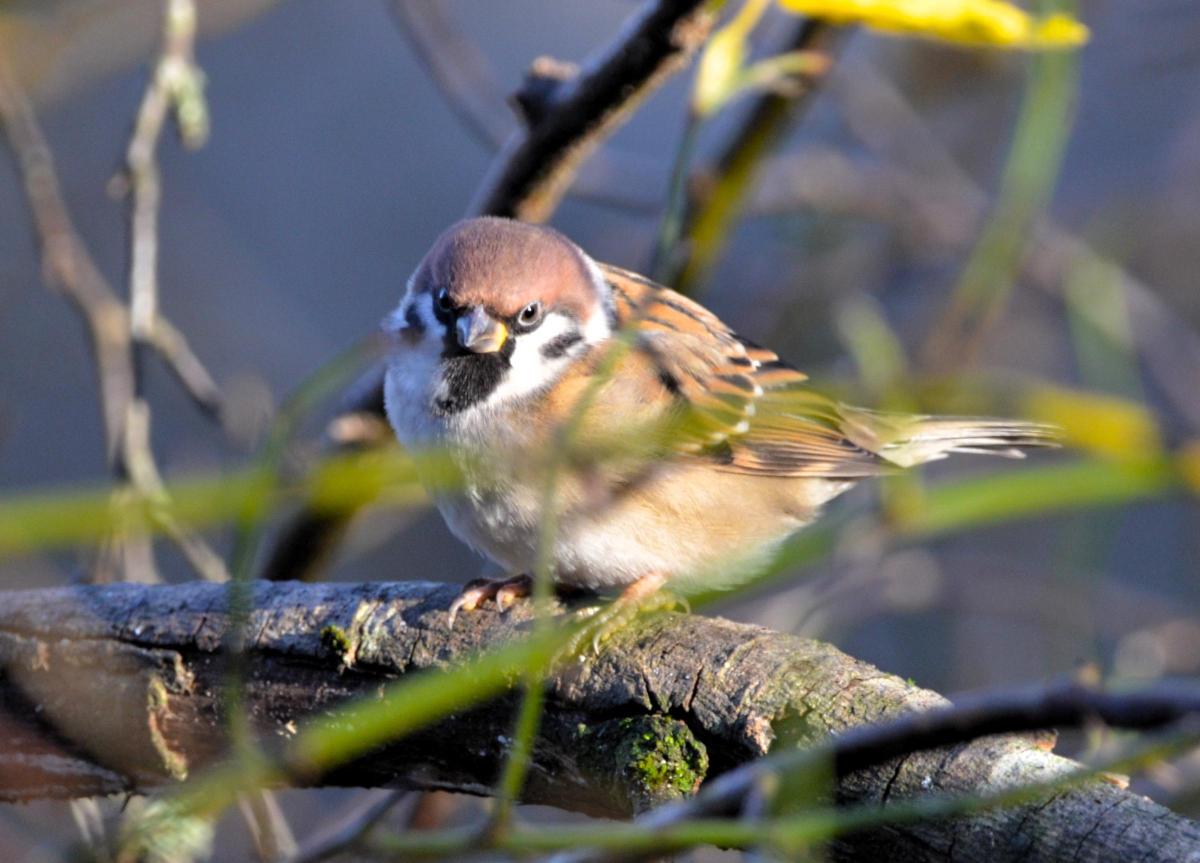
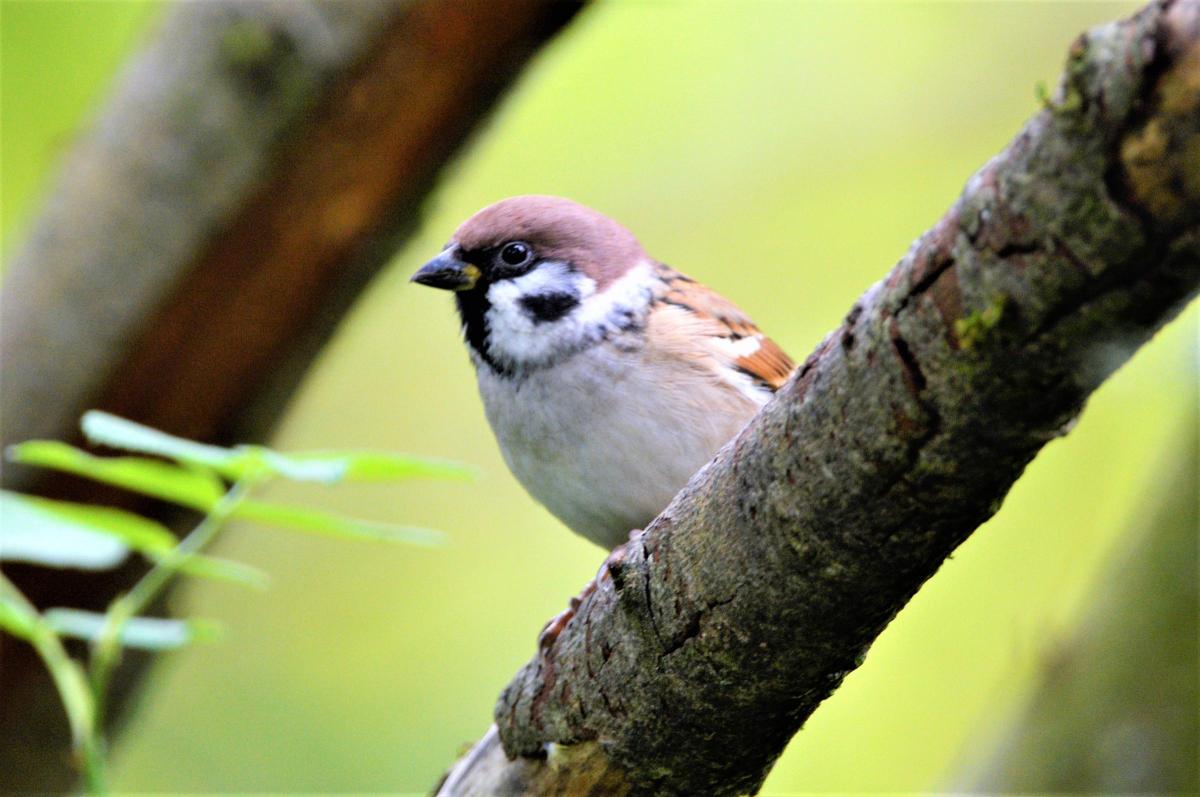
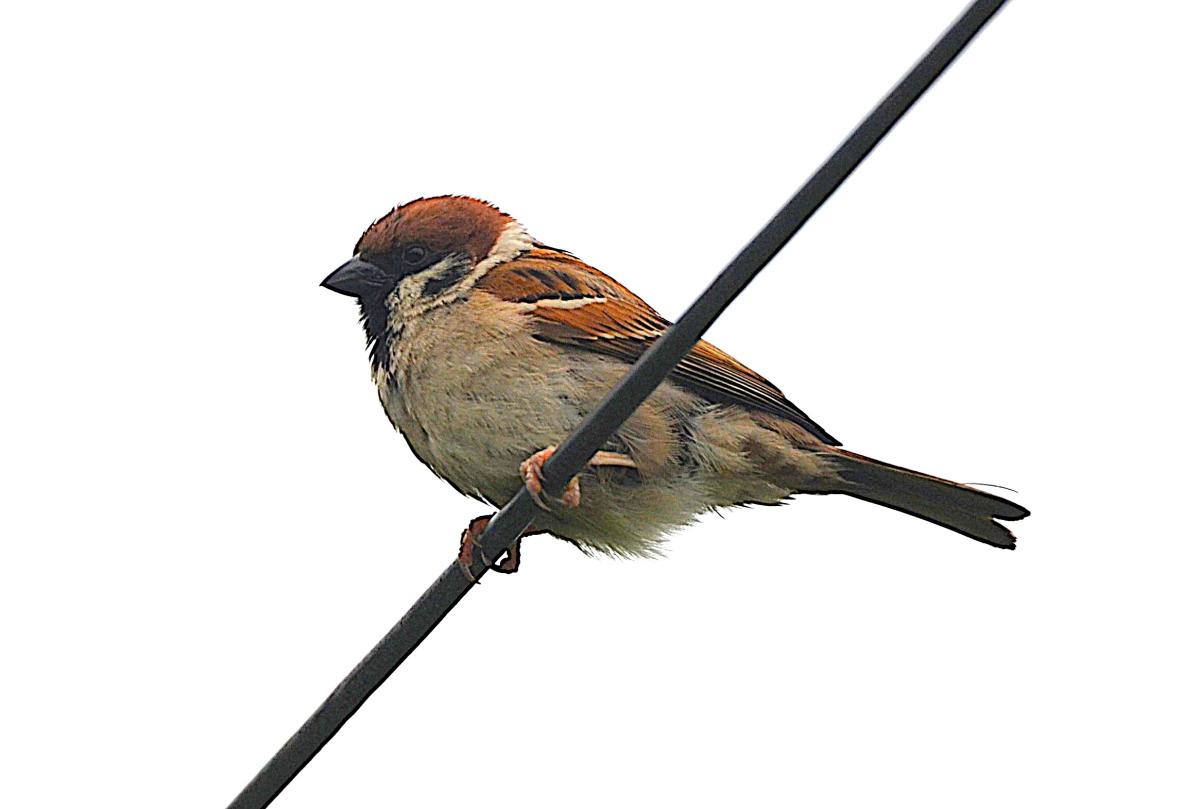
Not far from where the partridges foraged, I spotted a tree sparrow on a telegraph wire, which is another declining bird, and not nearly as common as their more familiar house sparrow cousins.
Tree sparrows are joyous little birds with their brown caps and black ‘ear’ markings.
The reasons for their declines mirror that of the partridge, which underlines the fragility of nature and the need to protect it.
Thankfully, in this little corner of Clackmannanshire both these little farmland wildlife gems still occur, albeit in small numbers.


Share